
Traffic on a main road or motorway
A constant wash of sound, all year round, at night too.
Go for mass and height: at least 2 metres, as close to the source as possible or along the property line. Kokowall or Noise-Reducer.
Traffic, neighbours, a heat pump or a pool pump: in the garden you hear everything. This page shows which system fits your situation, how high it needs to be and what to budget.
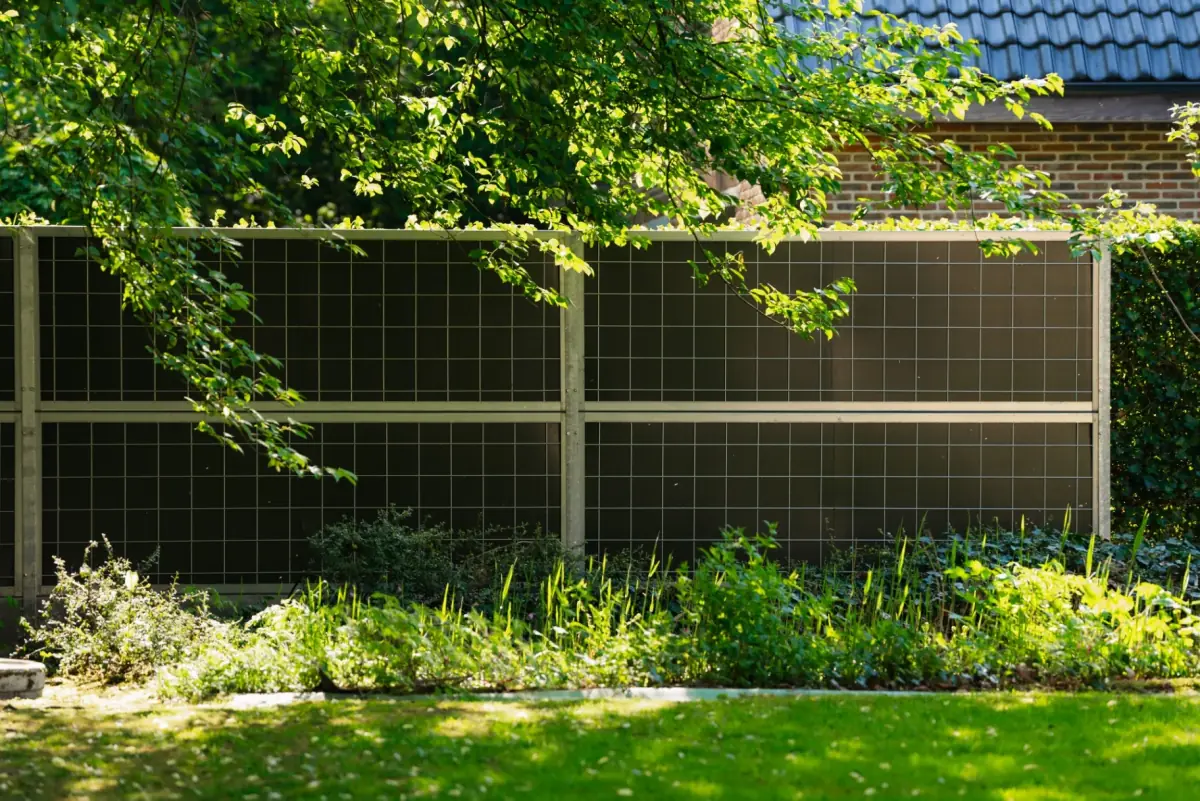
The source drives the choice more than taste does. Find your situation below and you will know which direction to look in.
A constant wash of sound, all year round, at night too.
Go for mass and height: at least 2 metres, as close to the source as possible or along the property line. Kokowall or Noise-Reducer.
Peaks that stand out: voices, barking, a slamming door.
Removing the line of sight is half the work. A solid barrier of 2 to 2.5 metres along the property line works well here.
A low frequency hum, most annoying in the evening.
An enclosure around the unit delivers more than a long wall. Noise-Reducer with absorption on the inside.
Continuous humming during filter hours, right next to the terrace.
A small enclosure of 2 to 4 m², with ventilation designed in. Often the cheapest fix on this page.
Hard impacts of ball and glass, until late in the evening.
Here the club is the logical partner. We install the same absorbing barriers at clubs across Belgium.
Music and voices at weekends, mostly after ten.
Combine an absorbing barrier with enough height, and account for sound travelling over the top.
All four derive from our industrial barriers and are tested in accredited acoustic laboratories. The difference is mostly look, height and maintenance.
| System | Look | Acoustics | Heights | Maintenance | Best suited to |
|---|---|---|---|---|---|
| Kokowall | Coconut fibre sandwich, plantable with climbers | Rw 30 dB, absorption class A2 | Up to 2.5 metres for gardens, higher to order | Keep the climbers in check, otherwise maintenance free | A green garden where the wall may disappear into the planting |
| Noise-Reducer | Slim steel in 5 RAL colours | Rw 30 dB, absorbing versions up to A5 | Up to 3 metres, also as an enclosure | Maintenance free, 25 years and more service life | A clean lined garden, enclosing a pump or heat pump, narrow passages |
| Noise-Reducer Wood | Wood look cladding on a steel core | Same performance as Noise-Reducer | Up to 3 metres | Low maintenance, no treatment needed | Anyone who wants the warmth of wood without the upkeep |
| Noistop Wood | Real wood with wood wool filling | Rw 21 dB, absorption class A3 | Up to 2.5 metres | Wood weathers to grey naturally | Terrace, pool and garden house where wood sets the tone |
The stated values come from the laboratory reports for each system. What you actually gain in your garden depends on height, distance and where the source sits.
In a garden, height matters more than material. As long as you can see the source you can hear it: sound travels in a straight line and bends only slightly over the top edge of a barrier.
Photos of installed garden barriers. We will extend this block as new projects are completed.
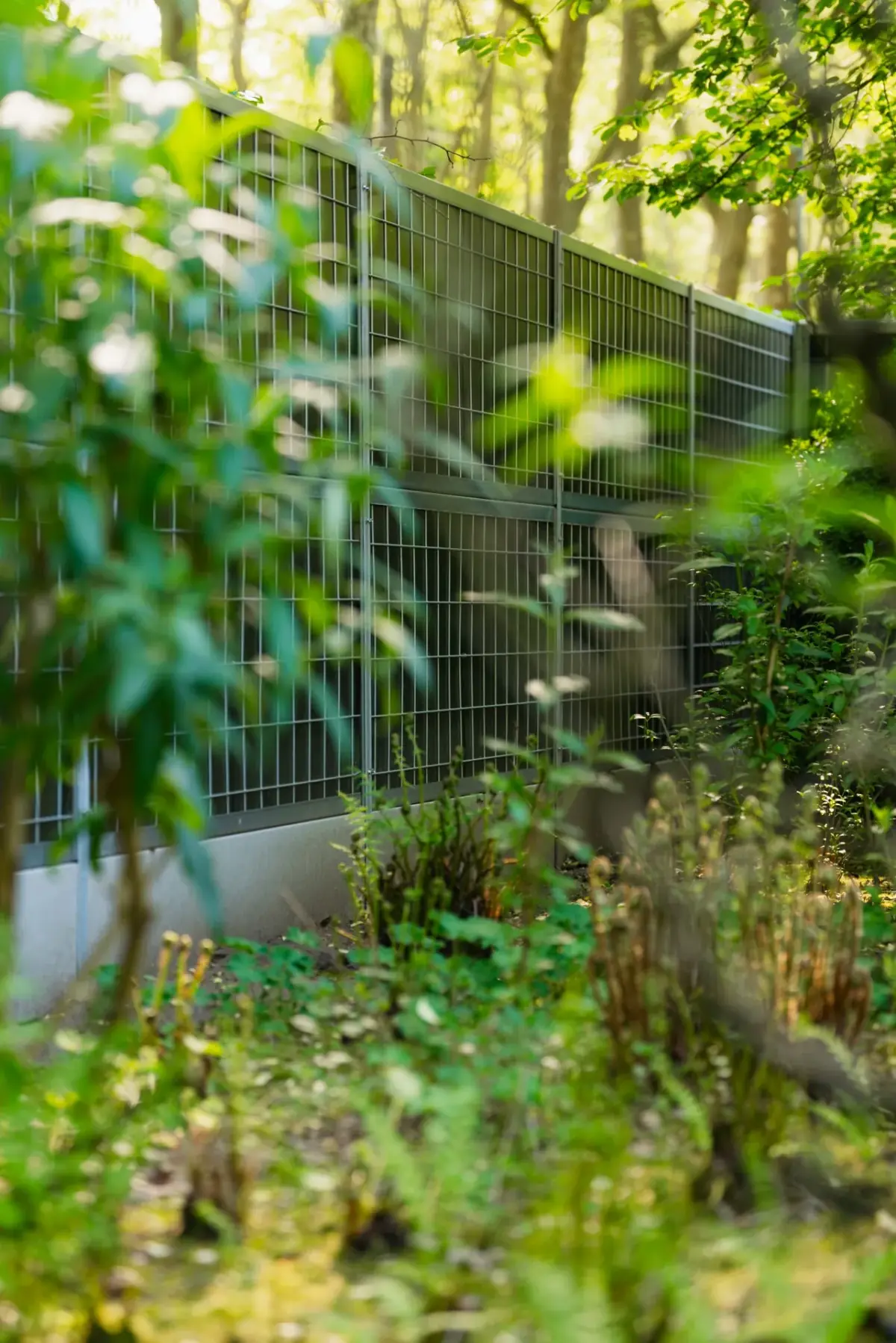
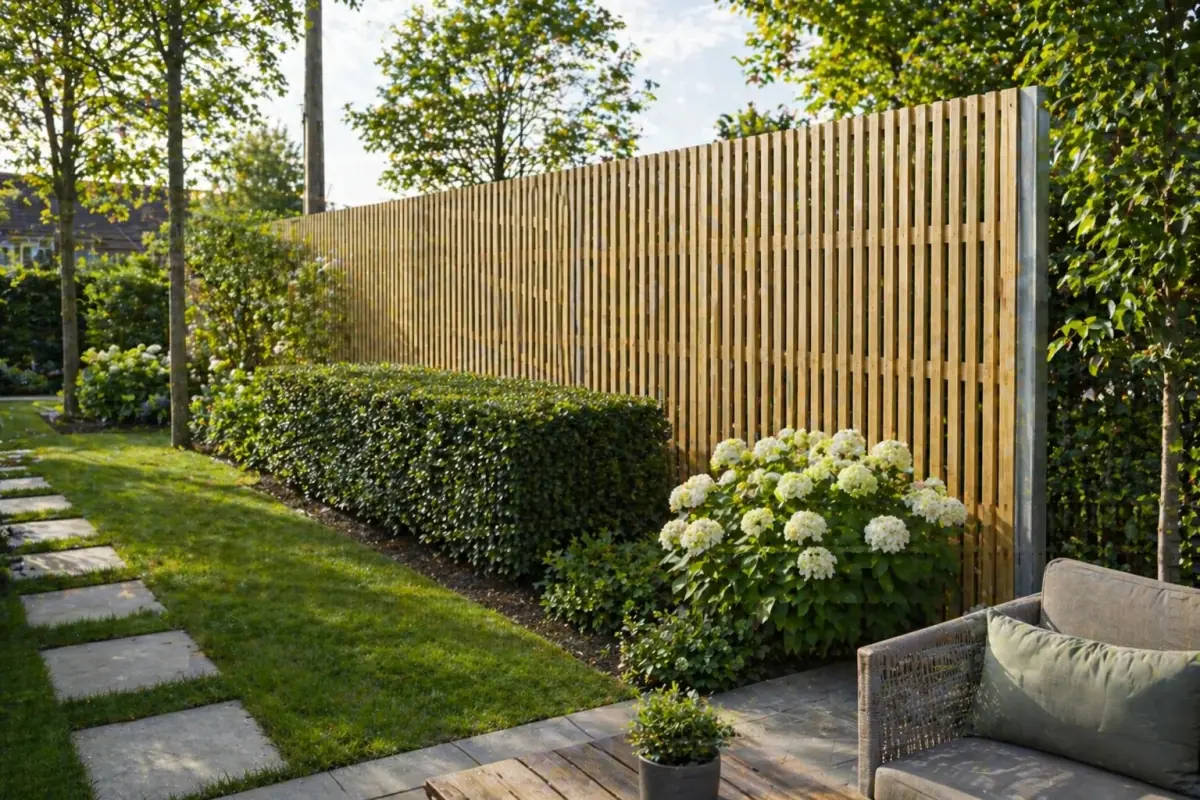
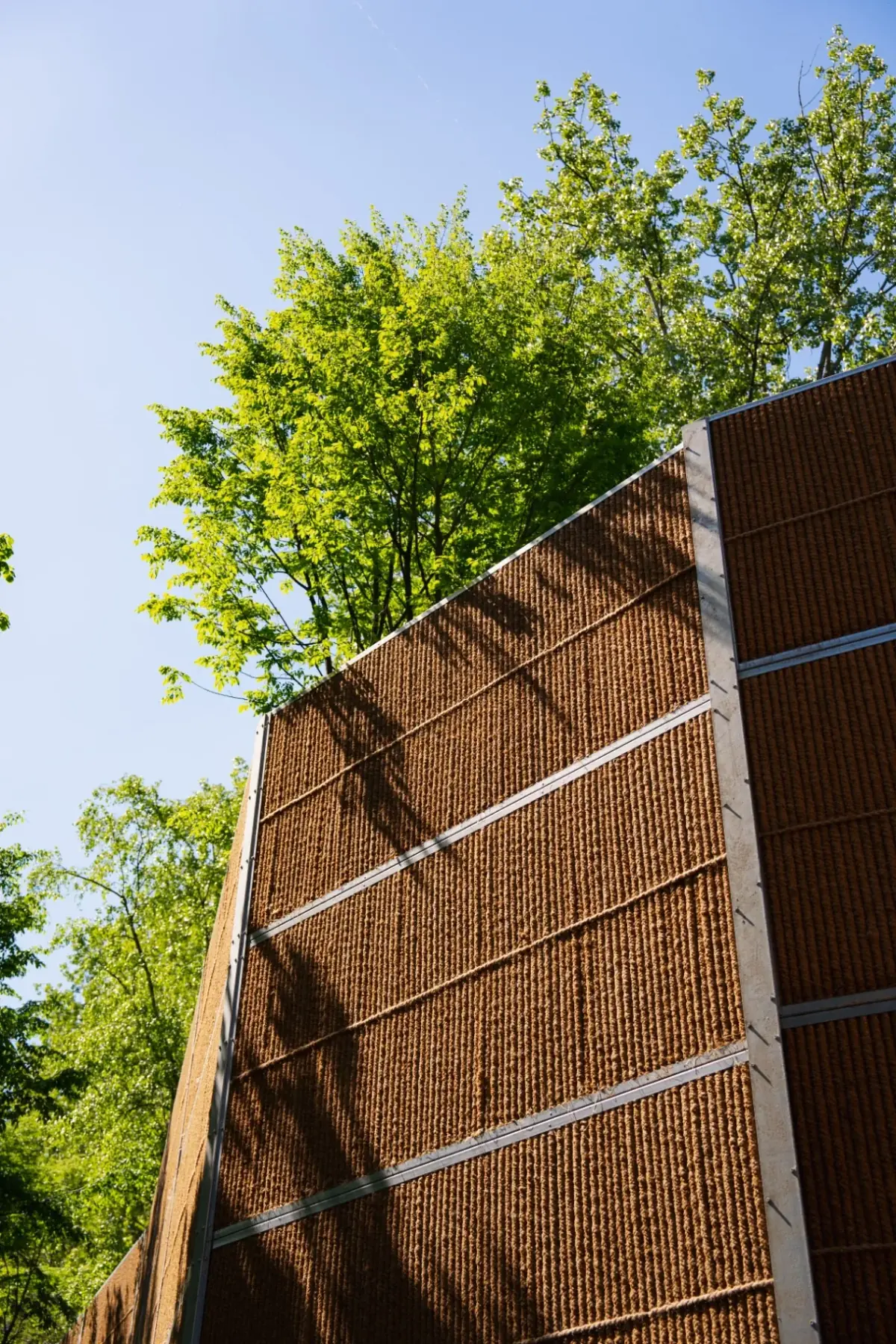
A garden wall is priced per m²: length times height. That shows you the order of magnitude of your project straight away.
6 metres long, 2 metres high
12 m²
Typical for a heat pump, a pool pump or a corner of the terrace you want shielded.
20 metres long, 2 metres high
40 m²
The most requested garden wall: one property line between you and the source.
40 metres long, 2.5 metres high
100 m²
A garden along a main road or railway. Here the choice of system weighs heaviest.
Budget from around 200 EUR per m² for a garden wall, fully installed and excluding VAT. The final price depends on the system, the height and the situation on site.
These are indicative figures for budgeting, not a quotation. After a site visit you receive a fixed price.
You send us your situation with a few photos. We visit free of charge, take measurements and settle the height and the system with you.
You receive a quotation per m² with everything included: material, foundation, transport and installation.
A wall on the property line affects your neighbours. A conversation up front avoids disputes, and neighbours sometimes share the cost.
Below 2 metres usually nothing is required, above that often yes. We tell you what applies in your municipality.
Our team installs a standard garden wall in one to two days as a rule. Your garden stays usable in the meantime.
If you are handy, we deliver the system with installation instructions and stay available for questions.
Fill in what you know. With length, height and a photo we can often give a first indicative price, even before the site visit.
In garden projects we typically measure 10 to 25 dB(A) less, depending on height, distance and source. In the Bruges project 22 dB(A) was achieved. Every 10 dB(A) feels roughly half as loud.
Usually yes, but rules differ per municipality and depend on the height. Below 2 metres a permit is often not needed, above that it usually is. We check this for you before you decide.
With climbers a Kokowall is normally a green hedge after two seasons. We advise on plant choice based on sun, shade and how fast you want cover.
Steel and wood look are maintenance free. Real wood weathers to grey naturally. On a planted coconut wall you mainly keep the climbers in check.
Allow a few weeks between approval and installation, depending on system and colour. Installation itself takes one to two days for a standard garden wall.
Yes. The panels are manageable and we supply installation instructions. We do review the foundation first, because that is where the difference lies between a wall that works and a wall that leaks sound.